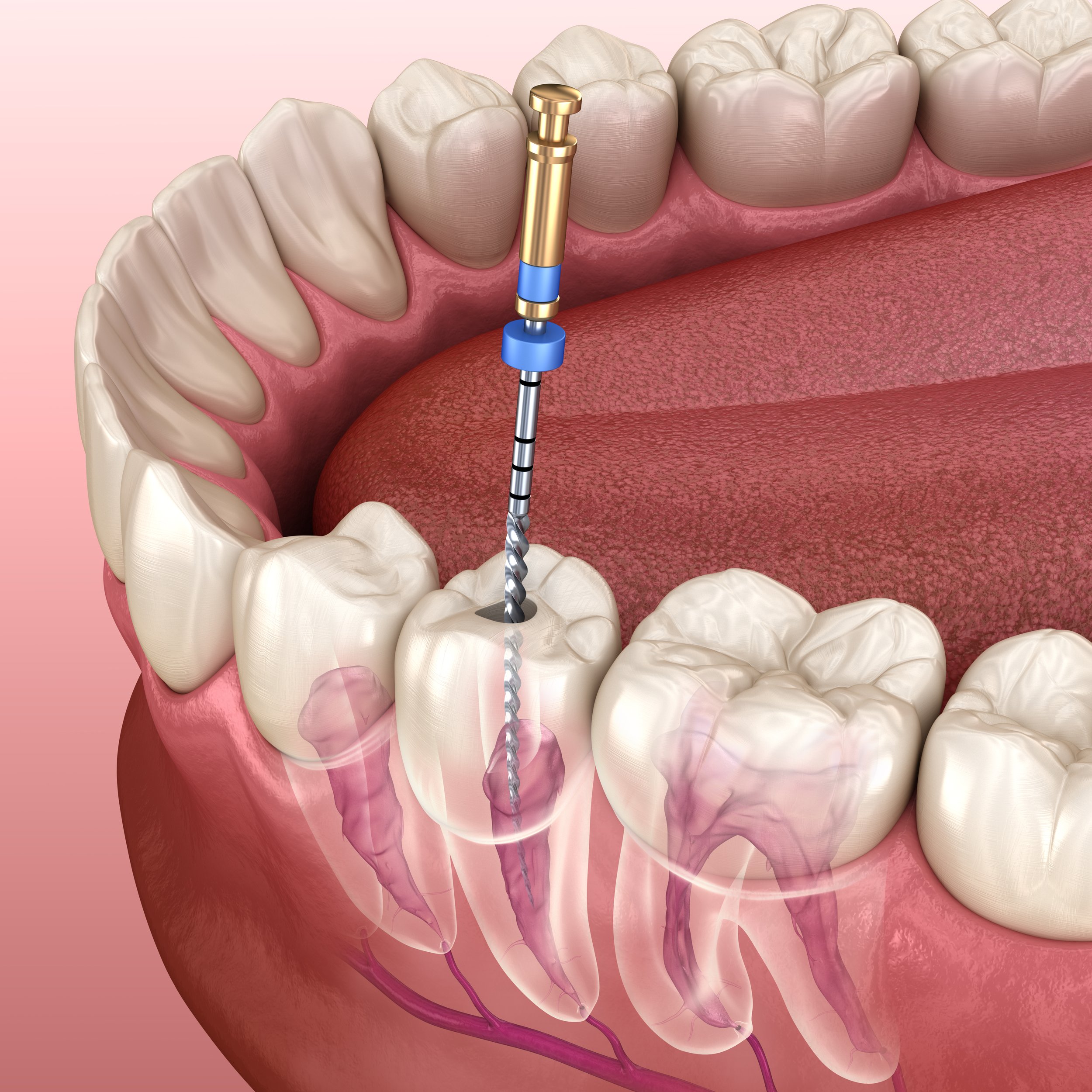
Relieve pain and save your natural tooth — a precise, comfortable procedure that stops infection at its source.
What it is
Inside every tooth is a soft core of nerves and blood vessels called the pulp. When deep decay, a crack, or trauma allows bacteria to reach it, the pulp becomes infected and inflamed — causing pain that can range from a dull ache to intense, throbbing discomfort.
Root canal treatment removes the infected pulp from inside the tooth, cleans and disinfects the canals, and seals them to prevent reinfection. The tooth is then restored, usually with a filling or a crown, so it can go on functioning normally for years to come.
At Azul Dental Center, every root canal is guided by 3D CBCT imaging to map the exact shape of the canals beforehand, helping us work with precision and keep the procedure as comfortable as possible.
Why save the tooth
Relieves the pain fast
Removing infected pulp eliminates the source of the pain, usually bringing significant relief right after treatment.
Keeps your natural tooth
Nothing functions quite like your own tooth. Root canal treatment avoids the need for extraction and replacement.
Stops the infection spreading
Left untreated, infection can spread to surrounding bone and tissue. Treating it early protects your overall oral health.
Restores everyday function
Once restored, a root canal treated tooth can be used to eat, bite and chew comfortably again, just like your other natural teeth.
The process
Diagnosis & imaging
We examine the tooth and take the appropriate X-rays to confirm the infection and assess the root canals before treatment begins.
Cleaning the canals
Under local anaesthetic, the infected pulp is removed and each root canal is carefully cleaned, shaped and disinfected.
Sealing the canals
The cleaned canals are filled with a biocompatible material to seal the tooth and help prevent future infection.
Final restoration
A filling or crown is placed to protect the tooth and restore full biting strength, completing the treatment.
Root canal treatment is recommended when the pulp inside a tooth becomes inflamed or infected, most commonly due to deep decay, a crack or trauma. Symptoms may include persistent toothache, lingering sensitivity to hot or cold, swelling, or a darkened tooth—although some teeth have few or no symptoms at all.
During your consultation, we'll examine the tooth, take the appropriate X-rays and recommend the treatment that offers the most predictable long-term outcome—whether that's a root canal or an alternative approach.
Common questions
The procedure itself is done under local anaesthetic, so you should not feel pain during treatment. In fact, most patients find it far more comfortable than the toothache that brought them in. Some mild soreness for a day or two afterward is normal and manageable with standard pain relief.
Root canal treatment is usually completed in one or two visits, depending on your individual case. After assessing your tooth, we'll explain the treatment plan and let you know how many appointments are likely to be needed.
It depends on how much of the tooth structure remains. Back teeth that do most of the chewing work often need a crown for long-term strength, while a smaller filling may be enough for a front tooth with less damage. We will recommend the right restoration for your specific case.
Left untreated, the infection can spread to the surrounding bone, cause an abscess, and lead to more significant pain and swelling. In many cases, the tooth eventually has to be extracted. Treating it early is almost always simpler, less costly, and less invasive than waiting.
Get Started
Tooth pain rarely resolves on its own. Book a consultation and we will diagnose the cause quickly, explain your options clearly, and get you out of pain.
Or call +212 525 39 73 53